

I remember seeing a 48-year-old patient for the first time who walked into the room and said, “This is the worst lipid panel of my entire life.”
Nothing in her life had changed.
Not her habits. Not her nutritional choices. Not her exercise patterns.
She had seen her primary care physician, been told to cut down on saturated fat, and then been sent away for a year. And during that year, she became hypervigilant about everything she ate. She audited her grocery cart. She questioned every choice. She was determined that she must have done something wrong, that somehow her nutritional choices had failed her, and that she was going to rectify it.
Before she came in to see me, we repeated those labs.
They were worse.
She was devastated.
What she did not understand was that this was not due to a change in habits or nutrition, nor to aging alone. Her ovaries were changing. Her hormones were fluctuating. And her liver, the organ that creates cholesterol, was responding in a very predictable fashion to that hormonal change.
When Does Cholesterol Go Up During Menopause?
Here is what the science shows us.
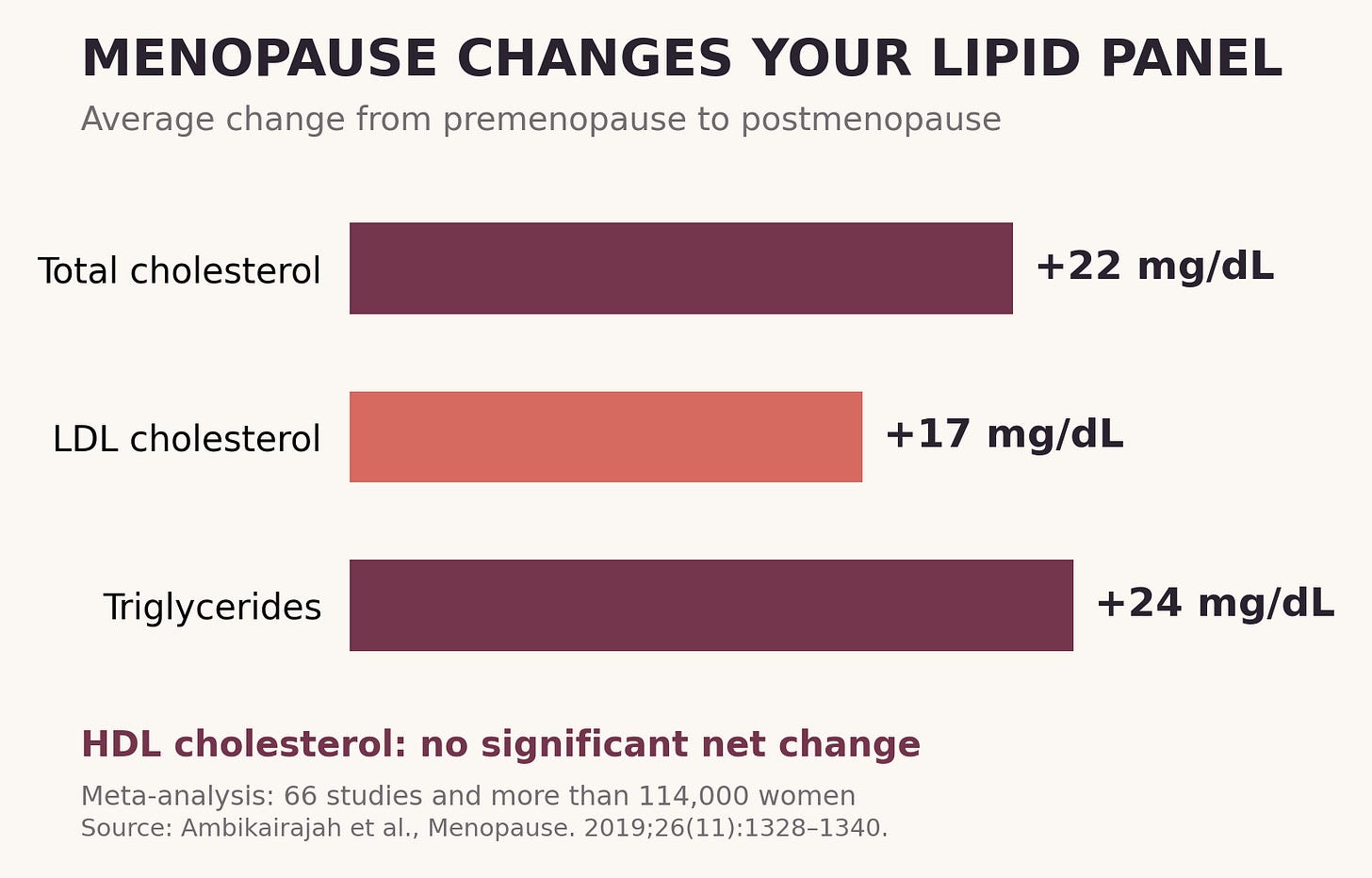
In a meta-analysis of 66 studies including 114,655 women, 68,394 premenopausal and 46,261 postmenopausal, total cholesterol increased by about 22 mg/dL across the menopausal transition. LDL increased by about 17 mg/dL. Triglycerides increased by about 24 mg/dL.
And HDL, the number that reassures many women, did not significantly change. In that same meta-analysis, HDL rose only 0.02 mmol/L, essentially flat, while the total cholesterol-to-HDL ratio rose by 0.39.
That matters because a stable HDL number can make the panel look less concerning than it is. The cholesterol burden is rising, but the “good cholesterol” number is not rising enough to offset it.
That distinction becomes important later, because HDL quantity is not the same thing as HDL function.
Source: Ambikairajah, Walsh & Cherbuin, Menopause 2019.
What happens to cholesterol during menopause?
I remember learning that elevations in cholesterol were only due to genetic factors, poor diet, or simply aging.
That was dogma to me.
I had never learned in medical school or residency that the effects of estrogen deprivation on the liver could directly lead to elevations in LDL and triglycerides.
If this were simply due to aging, we would expect a slow drift across the menopause transition. We would expect the kind of gradual climb we see with many other markers over time.
But that is not what happens.
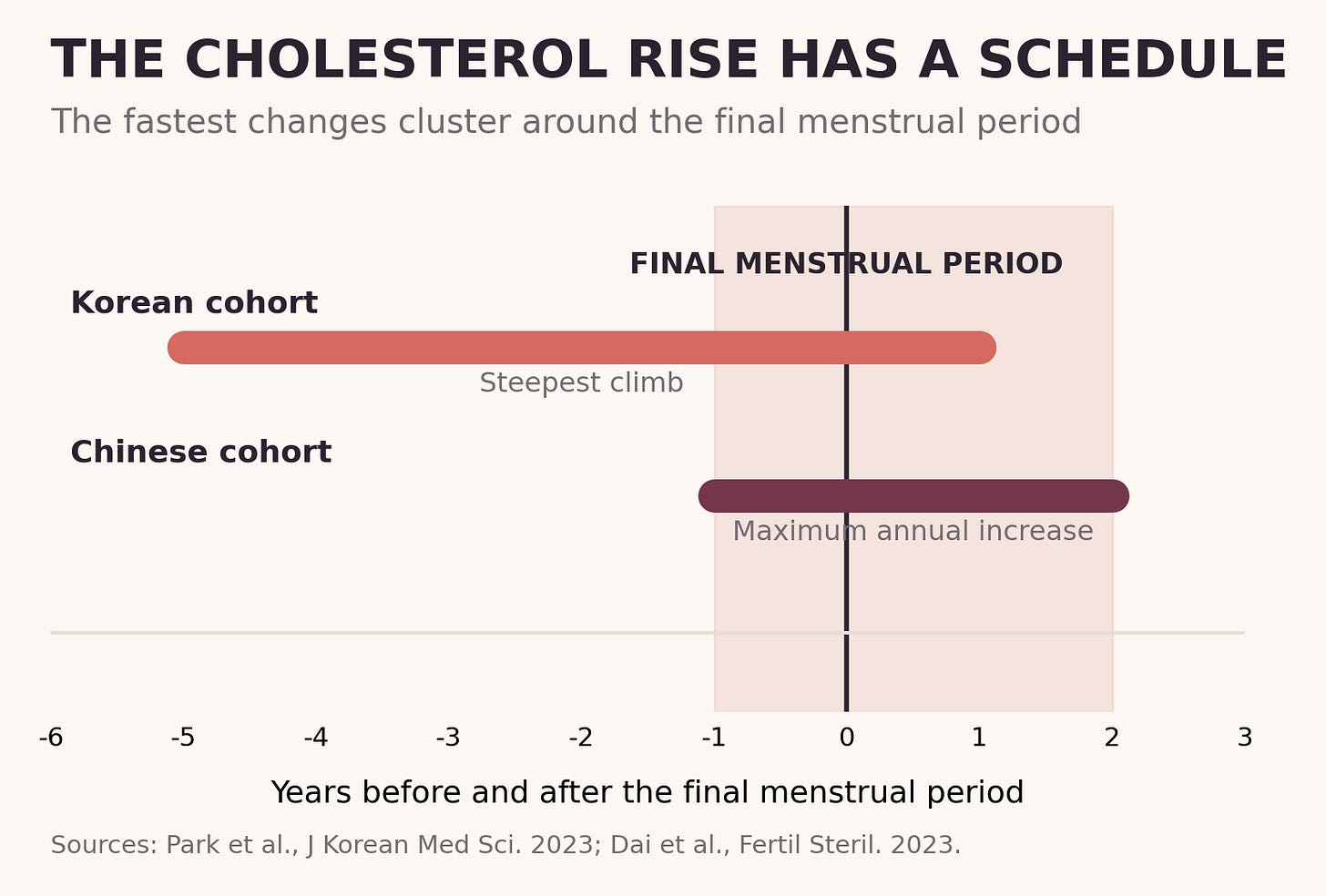
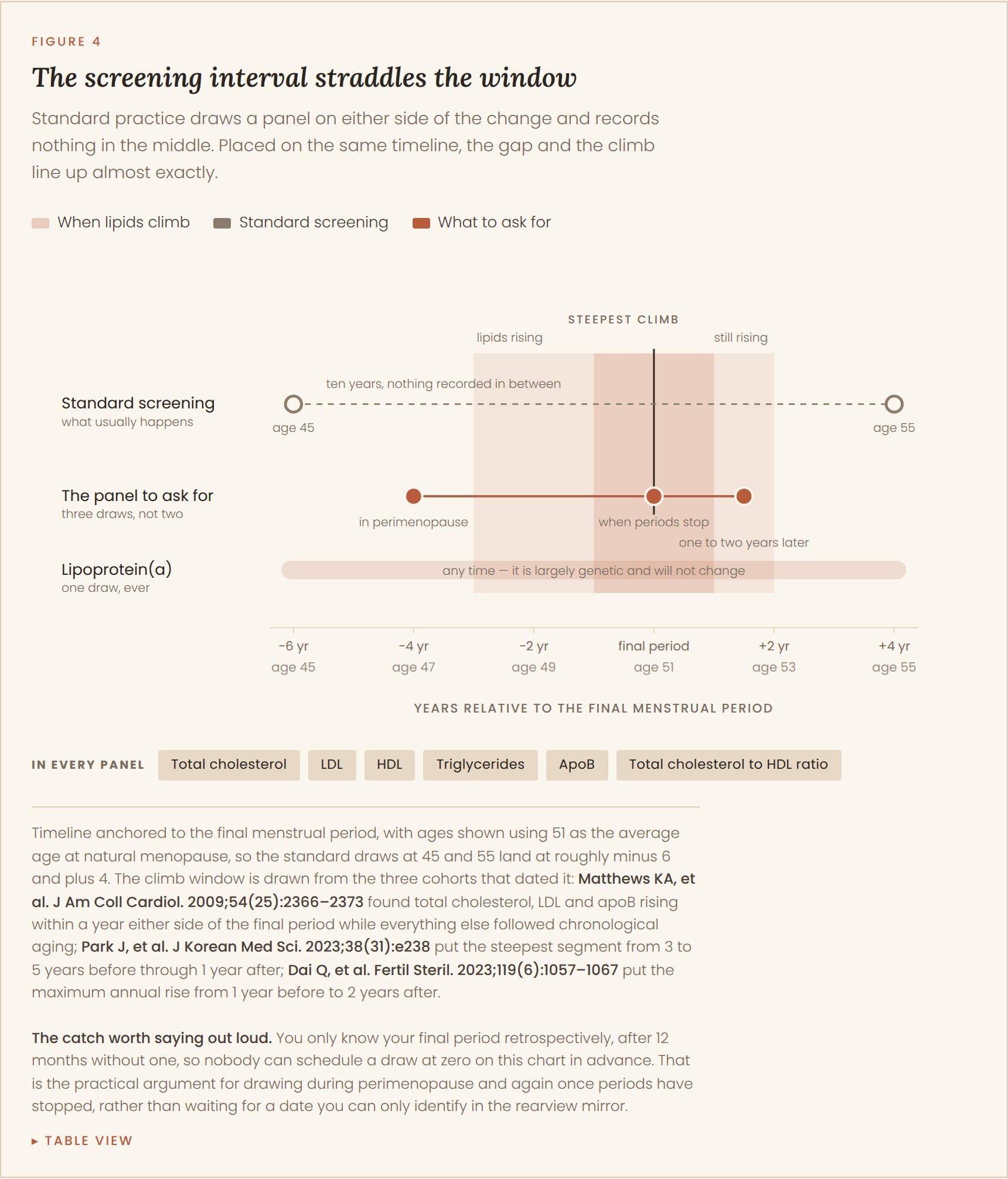
In the SWAN study, researchers measured lipid changes relative to the final menstrual period, not just chronological age. That distinction matters. They found that total cholesterol, LDL, and ApoB rose sharply within one year on either side of the final menstrual period.
Not everything behaved that way. Triglycerides, blood pressure, glucose, insulin, fibrinogen, and CRP fit a more linear aging model.
That is what makes this so important.
The rise in cholesterol was not just a slow background drift. It had timing. It clustered around a reproductive event.
Those findings have been supported by cohorts in Denmark, Korea, and China, each showing lipid changes clustering around the final menstrual period.
A gradual aging process does not usually produce a spike tied to a single reproductive event.
Source: Matthews et al., Journal of the American College of Cardiology 2009; Jensen, Nilas & Christiansen, Maturitas 1990; Park, Son & Park, Journal of Korean Medical Science 2023; Dai et al., Fertility and Sterility 2023.
Why your estrogen can look normal while your cholesterol climbs
One of the first lab changes we often see during a routine perimenopause evaluation is an elevation in lipids.
At the same time, estradiol levels may appear normal, depending on where a woman is in her cycle when the blood is drawn. That can make the whole picture confusing. She is watching her cholesterol climb, but she is being told her estrogen is “normal,” so she starts to wonder whether she invented the connection.
She did not.
In the background, FSH, or follicle-stimulating hormone, is rising steadily. The brain is trying harder and harder to stimulate ovaries that are becoming less predictable and less responsive.
And FSH receptors are not only in the ovaries. They are also found in other tissues, including the liver.
That matters because preclinical research has demonstrated that rising FSH levels, even when estradiol is held at normal levels, can directly contribute to elevated cholesterol. In that mouse model, the design is the point: estrogen was kept normal, FSH was increased, and cholesterol still rose.
This does not mean we know exactly how this translates to humans. The human data are still correlational. But it does give us a plausible mechanism for what so many women experience clinically.
A normal estradiol level in perimenopause does not mean nothing is happening to her.
Source: Guo et al., Cell Research 2019.
Does hormone therapy have a cholesterol-lowering effect?
The short answer is yes, but there is nuance.
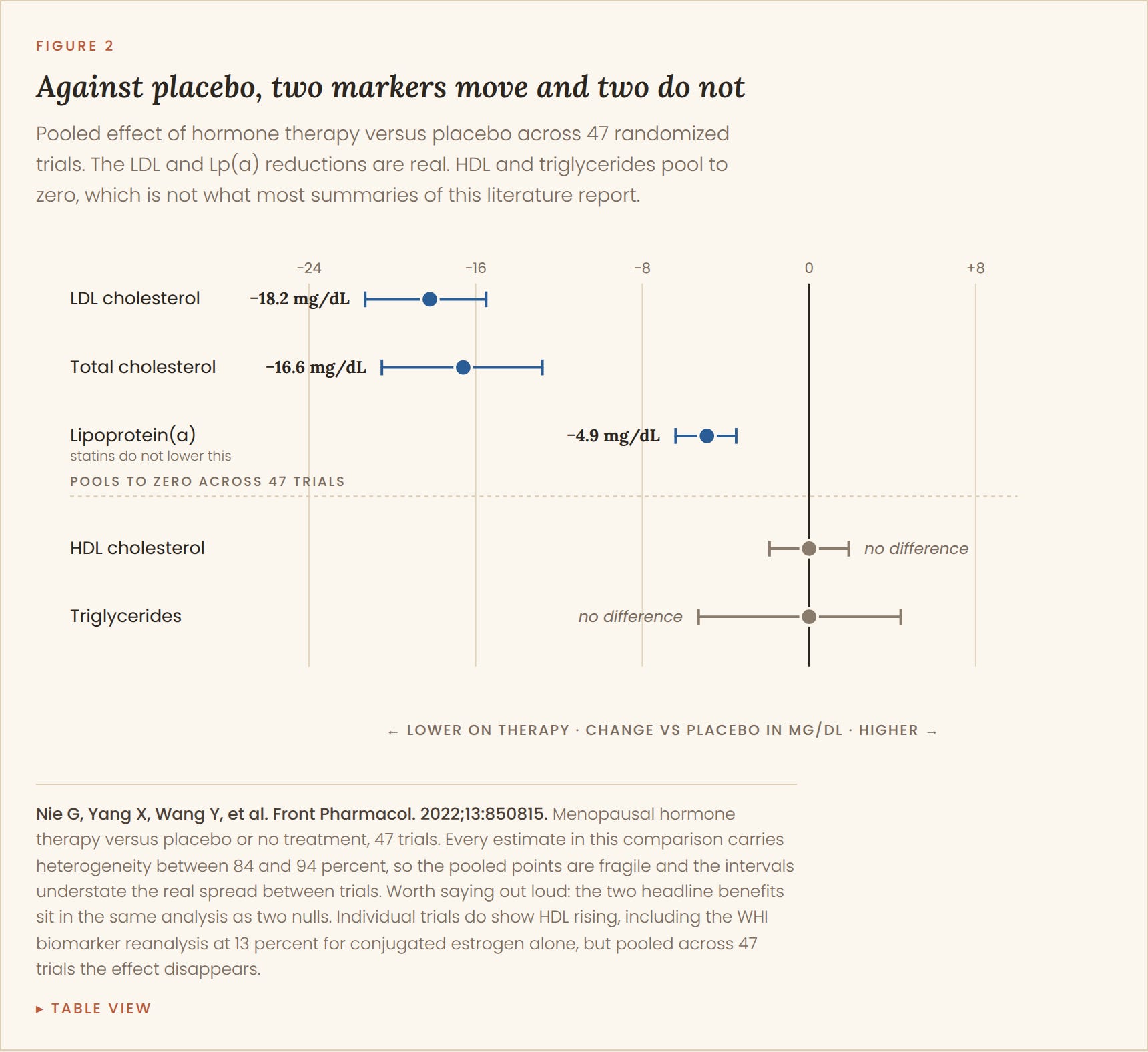
Hormone therapy does change lipids. In randomized trial data, menopausal hormone therapy lowers total cholesterol and LDL cholesterol. In the Women’s Health Initiative, LDL fell by about 11 to 12 percent over six years in both the estrogen-alone and estrogen-plus-progestin arms.
But hormone therapy is not a cholesterol medication. It is not a substitute for a statin when a statin is indicated, and it should not be started solely to lower cholesterol. Route matters.
There is a clear difference between oral estrogen and transdermal estradiol, and much of that difference is due to the liver. Anything we ingest is absorbed through the gut and sent to the liver for first-pass processing. When oral estrogen reaches the liver, it can lower LDL but also raise triglycerides.
Transdermal estradiol is different. Because it is absorbed through the skin, it largely avoids first-pass metabolism in the liver. It has less direct hepatic stimulation, which is why triglycerides become one of the deciding factors when choosing a route.
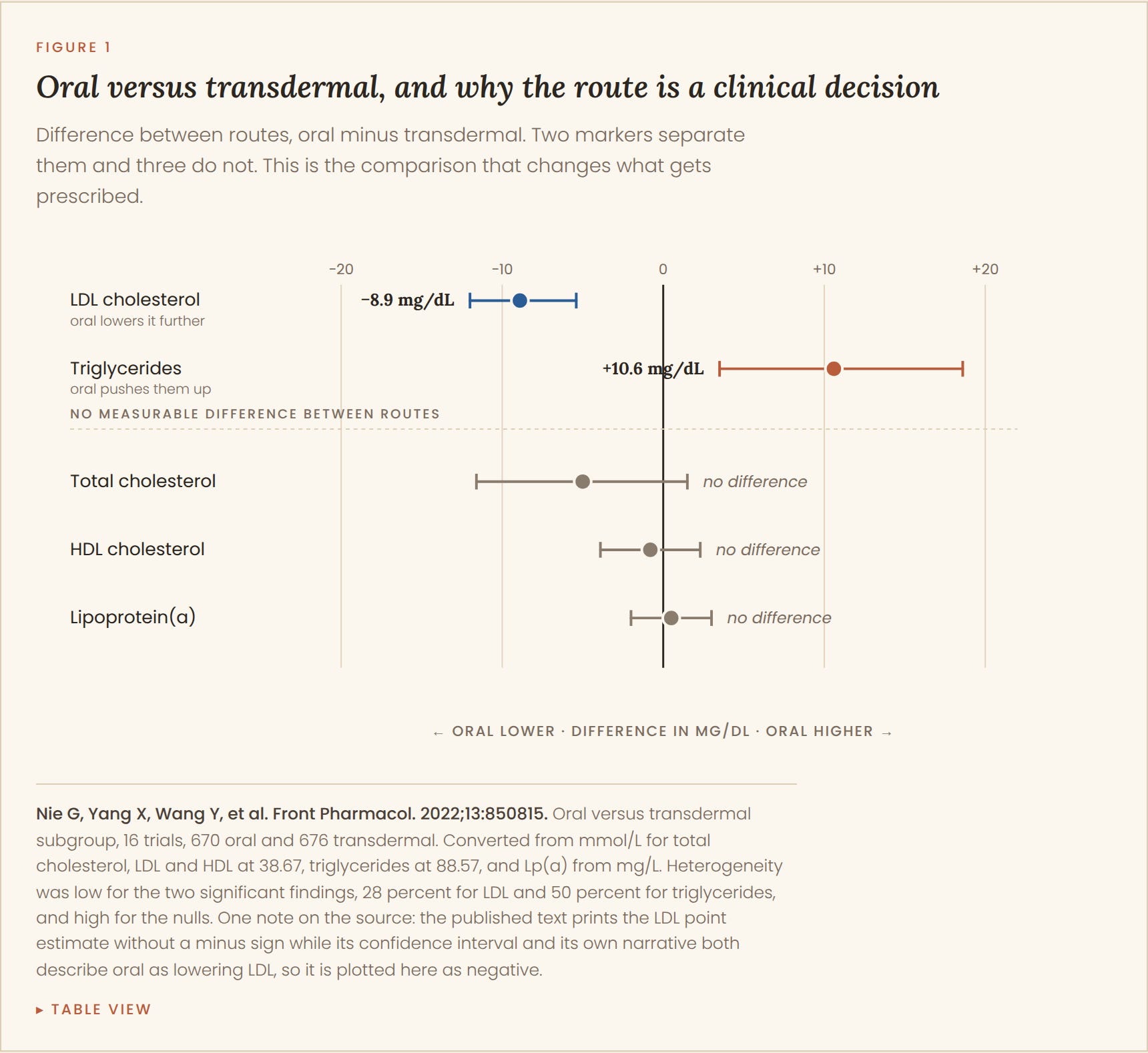
This is not about oral being “stronger” or transdermal being “gentler.” It is about matching the route to the patient’s cardiometabolic profile. If a woman already has elevated triglycerides, insulin resistance, metabolic syndrome, or other risk factors, transdermal estradiol is often the more physiologically appropriate choice.
Lipoprotein(a), or Lp(a), deserves its own conversation. Lp(a) is largely genetic, is an independent cardiovascular risk factor, and is still not checked nearly often enough. Most women need it measured once in their lifetime.
Is hormone therapy a drug used to regulate cholesterol?
The short answer is no.
Hormone therapy can lower Lp(a), and in one trial, it lowered Lp(a) by 27 percent while simvastatin did not change it. That does not make hormone therapy a cholesterol treatment. But it does matter for women whose cardiovascular risk is being underestimated because Lp(a) was never measured.
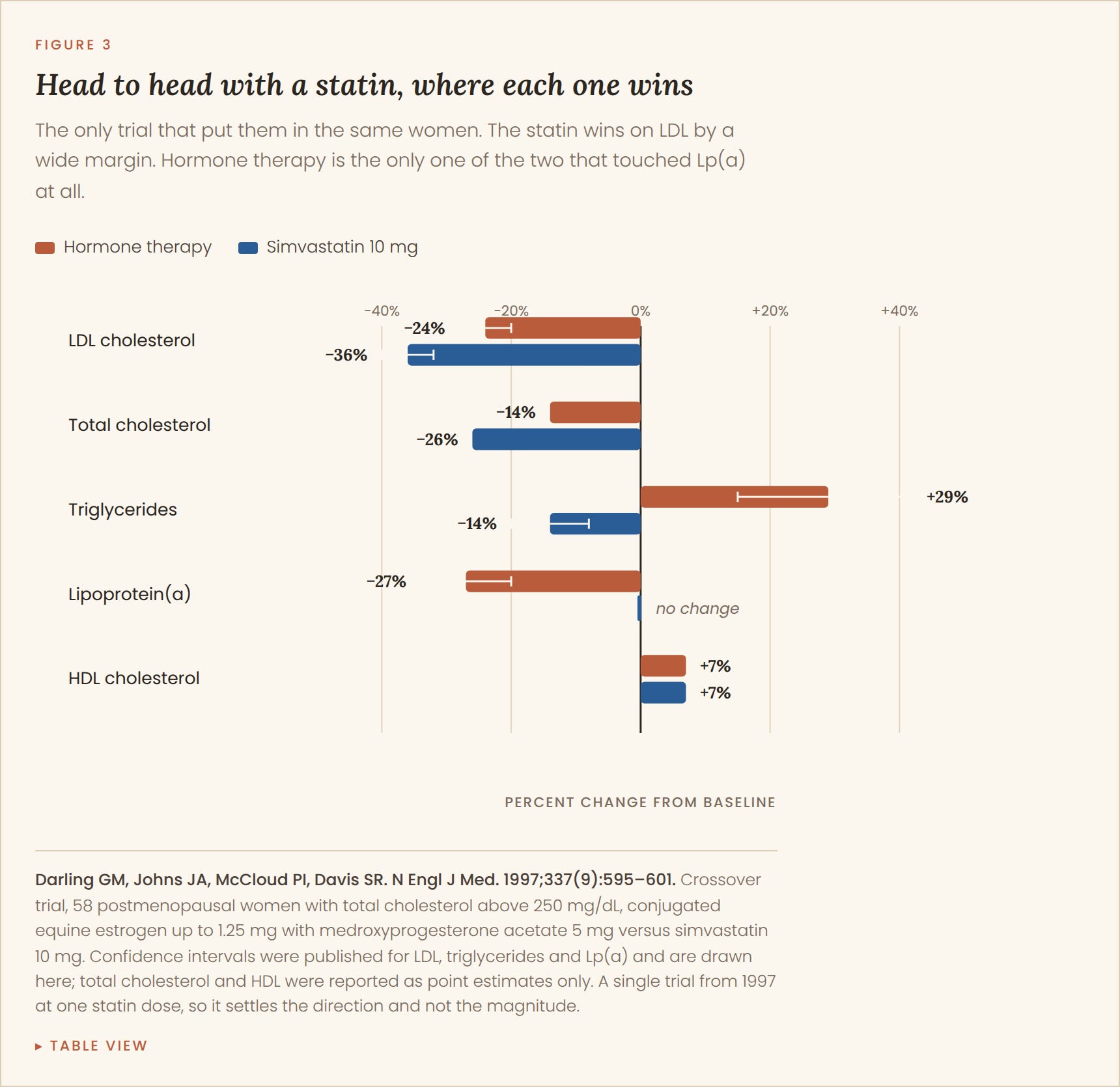
Check baseline lipids before starting hormone therapy, especially before starting oral therapy. If LDL is 190 mg/dL or higher, that changes the risk calculation. If triglycerides are elevated, route matters. If a statin is indicated, hormone therapy is not a substitute.
Hormone therapy can be part of a cardiometabolic conversation. It should not be the entire conversation.
Sources: Nie et al., Frontiers in Pharmacology 2022; Nudy et al., Obstetrics & Gynecology 2025; Anagnostis et al., Maturitas 2017; Darling et al., New England Journal of Medicine 1997; Rossouw et al., Obstetrics & Gynecology 2026; Doma et al., Menopause 2026; Godsland, Fertility and Sterility 2001.
When To Get Your Lipids Checked
This is a great question.
If we follow standard screening guidelines, many women will have a lipid panel near age 45 and then not have another one until close to age 55. You can see why this is a problem.
The entire menopausal shift may occur within that 10-year gap, with no measurements on either side of the change. Clinically, this is exactly where I see women get missed. They are told their numbers are “new,” “unexpected,” or “probably diet” when, in reality, no one checked during the years when the change was most likely to occur.
Women deserve to know when their risk is changing. They deserve to know whether the change is tied to diet, genetics, insulin resistance, thyroid disease, medication, menopause, or some combination of these factors.
To see all the labs you should ask for at your next appointment, download our free Lab Checklist.
Sources: Ambikairajah, Walsh & Cherbuin, Menopause 2019 · Jensen, Nilas & Christiansen, Maturitas 1990 · Park, Son & Park, Journal of Korean Medical Science 2023 · Dai et al., Fertility and Sterility 2023 · Getz et al., Evolution, Medicine & Public Health 2025 · El Khoudary et al., Arteriosclerosis, Thrombosis, and Vascular Biology 2020 · Li et al., Hormones 2020 · Ko & Kim, Nutrients 2020 · Moreno et al., European Heart Journal 2024 · Guo et al., Cell Research 2018 · Nie et al., Frontiers in Pharmacology 2022 · Nudy et al., Obstetrics & Gynecology 2025 · Anagnostis et al., Maturitas 2017 and 2020 · Darling et al., New England Journal of Medicine 1997 · Rossouw et al., Obstetrics & Gynecology 2026 · Godsland, Fertility and Sterility 2001 · Doma et al., Menopause 2025 · Da Roza et al., Atherosclerosis 2025.
I use AI tools as part of my writing process. I use them as research assistants. They help me search the literature, find and verify citations, build outlines, make graphics (of which I am hopeless), and catch mistakes in my drafts.
AI does not decide what I recommend to you. I read every study I cite myself. Every clinical claim comes from my training and my practice. And when I’m describing a pattern I observe in my patients rather than a finding from a clinical trial, I label it as such.
My overall cholesterol has been considered high since my 20s. I am now 64. It has gone up and I eat healthy. I exercise. Every single day. Yet my LDL was 161 and total cholesterol was 258. HDL was 84. Triglycerides were 81.
They are trying to put me in statins. So far I am refusing. She is insisting I get an artery scan without contrast. So I’m hopeful my arteries will be in good shape. Thank you for your excellent article. It’s so helpful
just started learning about this in my perimenopause certification course! amazing how estrogen affects literally all body systems